Disclaimer:
Please be aware that the content herein has not been peer reviewed. It consists of personal reflections, insights, and learnings of the contributor(s). It may not be exhaustive, nor does it aim to be authoritative knowledge.
Overview
Prepared by (Name of the experimenter)
AccLabPY
On date (Day/Month/Year)
18/09/2023
Current status of experimental activity
Completed
What portfolio does this activity correspond to? If any
Capacities for Social and Public Innovation
What is the frontier challenge does this activity responds to?
Building innovation capacities
What is the learning question(from your action learning plan) is this activity related to?
The original learning questions of our action plan are: How to implement and evaluate the impact of an innovation pilot project to improve a specific public service? How to implement and evaluate the impact of an innovation pilot project to improve a specific public policy?
Please categorize the type that best identifies this experimental activity:
Pre experimental (trial and error, prototype, a/b testing)
Which sector are you partnering with for this activity? Please select all that apply
Public Sector, Civil Society/ NGOs
Please list the names of partners mentioned in the previous question:
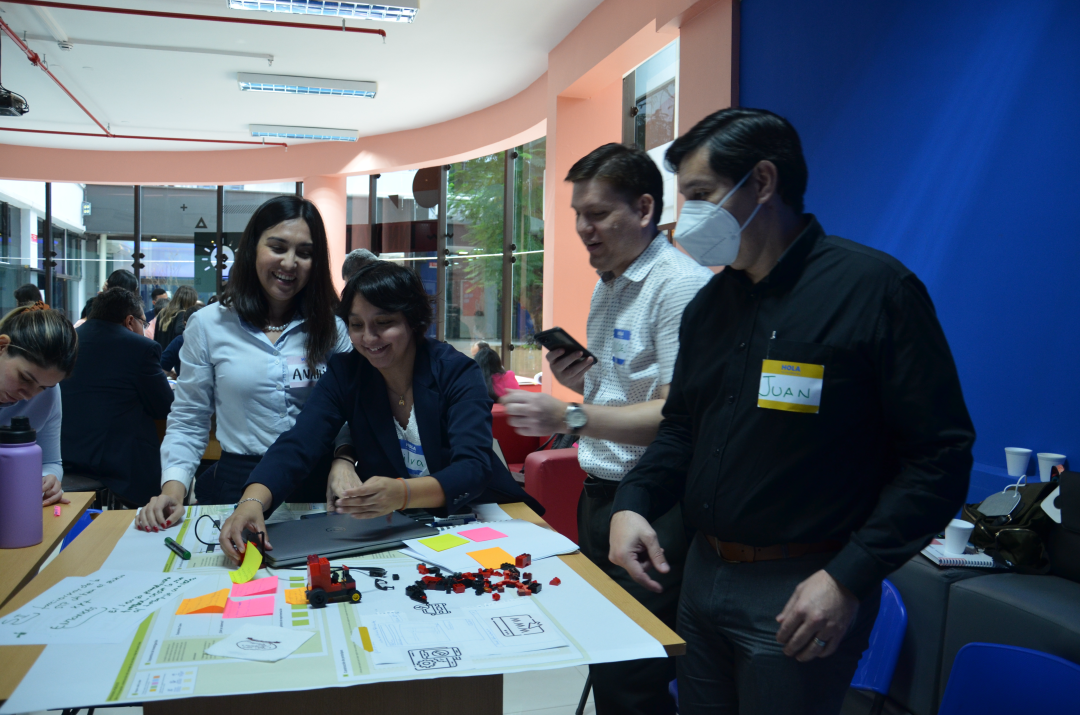
The National Innovation Strategy (ENI) and the National Science and Technology Council (CONACYT) act as organizers of the Innovative Public Program, where the Acceleration Laboratory provides technical support and mentoring. A team formed by officials from theTechnical Unit of the Social Cabinet of the Presidency of the Republic (UTGS) and the Ministry of Children and Adolescents (MINNA) participated in the Public Innovators Program and were the winners, therefore, the pilot of the Immediate Alert and Response System (SARI) they proposed received a fund to be implemented.
Design
What is the specific learning intent of the activity?
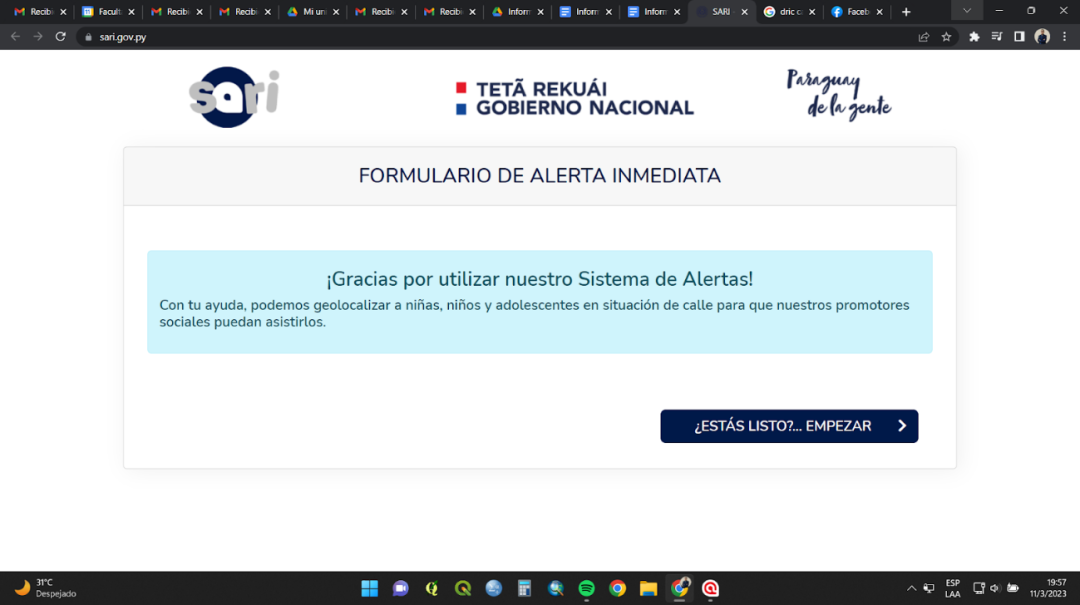
It is a system that allows the identification, attention and immediate response to Children and Adolescents (NNA) in situations of violation of their rights on public roads. The system receives case reports from citizens and records georeferenced data in real time. This information is processed by interdisciplinary teams of the Ministry of Children and Adolescents (MINNA) and the Technical Unit of the Social Cabinet (UTGS). This innovation seeks to establish a system of immediate attention to these alerts and to have precise information for the design of public policies for the care and attention of children and adolescents. Does the digitalization of the interaction between citizens and the MINNA contribute to improving the experience of users who report on cases of children and adolescents in vulnerable situations on public roads, optimizing the response time of the state as a guarantor of rights?
What is your hypothesis? IF... THEN....
If the interaction between citizens and the MINNA is promoted through the use of SARI, then the response time to assist the children and adolescents will be optimized and the experiences of the citizens will improve.
Does the activity use a control group for comparison?
No, it does not use a control group
How is the intervention assigned to different groups in your experiment?
Non-random assignment
Describe which actions will you take to test your hypothesis:
The pilot was implemented for 4 weeks, between the months of November and December 2022 in the Capital and Central departments. The Public Innovators program proposes an evaluation phase of the implemented pilots, seeking to collect information on the functionality of the innovative solution, in order to devise mitigation strategies and the adjustments that are necessary before its scaling and definitive implementation within of the public institution where you stay.
The SARI evaluation consisted of 4 phases, which included data collection techniques such as (1) focus groups with external SARI users, (2) semi-structured interviews with internal users (UTGS and MINNA officials), and (3) heuristic evaluations carried out with user experience (UX) experts. The findings that emerged from this evaluation made it possible to have a guide for modifications that improve the experience of SARI users and adapt to their needs and expectations.
Results
Was the original hypothesis (If.. then) proven or disproven?
Not proven
Do you have observations about the methodology chosen for the experiment? What would you change?
For the learning objectives, we should establish a better monitoring and evaluation strategy. As the focus has been on the design and implementation of the solution, the evaluation strategies were not well defined, and there was no rigor in collecting data systematically.
From design to results, how long did this activity take? (Time in months)
4 months
What were the actual monetary resources invested in this activity? (Amount in USD)
For evaluation purposes only:
1. Specialists in R&D ~ $10000
4. Comms ~ $1000
5. Other resources: time invested by AccLab
Members (average or 2h-4h/week over the full period of the pilot), and time
spent by officials from MINNA and UTGS for the intervention.
Does this activity have a follow up or a next stage? Please explain
No
Is this experiment planned to scale? How? With whom?
The Ministry of Childhood and Adolescense has adopted the tool and it is currently maintaining it after we succesfully transferred all the technical resources into their server. There are plans to scale this system at a regional level.
Please include any supporting images that could be used to showcase this activity
Please add any supporting links that describe the planning, implementation, results of learning of this activity? For example a tweet, a blog, or a report.
Considering the outcomes of this experimental activity, which of the following best describe what happened after? (Please select all that apply)
This experiment led to adoption of new ways of working by our partners
Learning
What do you know now about the action plan learning question that you did not know before? What were your main learnings during this experiment?
We learned that the overload of the Fono Ayuda service makes it difficult to provide immediate attention to cases of violation of the rights of children and adolescents, which is why there is a very urgent need to have tools like SARI to accelerate these processes.
What were the main obstacles and challenges you encountered during this activity?
The main obstacles were related to the limited time for the implementation of the pilot. This meant that testing time by internal and external users was limited, and therefore, generated a short margin of time to analyze the potential for adoption of this tool. Also, a difficulty we encountered is that citizens expressed fear for their safety when making reports (for example, having their cell phones stolen), which is a barrier that must be addressed in future iterations.
Who at UNDP might benefit from the results of this experimental activity? Why?
The Inclusive Development portfolio of the country office could benefit, since this tool speeds up the response of institutions to cases of children and adolescents in vulnerable situations on public roads, guaranteeing their safety and encouraging that these institutions do not leave no one behind.
Who outside UNDP might benefit from the results of this experiment? and why?
The main beneficiaries are children and adolescents in situations of violation of their rights since they will be able to be assisted immediately. On the other hand, citizens will also benefit from being able to interact with the government more directly to intervene in these cases. Finally, MINNA also benefits as an institution since SARI allows its performance to be more efficient.
Did this experiment require iterations? If so, how many and what did you change/adjust along the way? and why?
No
What advice would you give someone wanting to replicate this experimental activity?
The main recommendation is linked to considering a longer period of time for the user test. In addition,
complement all actions with a good communication campaign that disseminates the existence of the platform and its use, with the aim of achieving greater adoption by internal and external users.





 3Good health and well-being
 5Gender equality
 16Peace, justice and strong institutions


Comments
Log in to add a comment or reply.